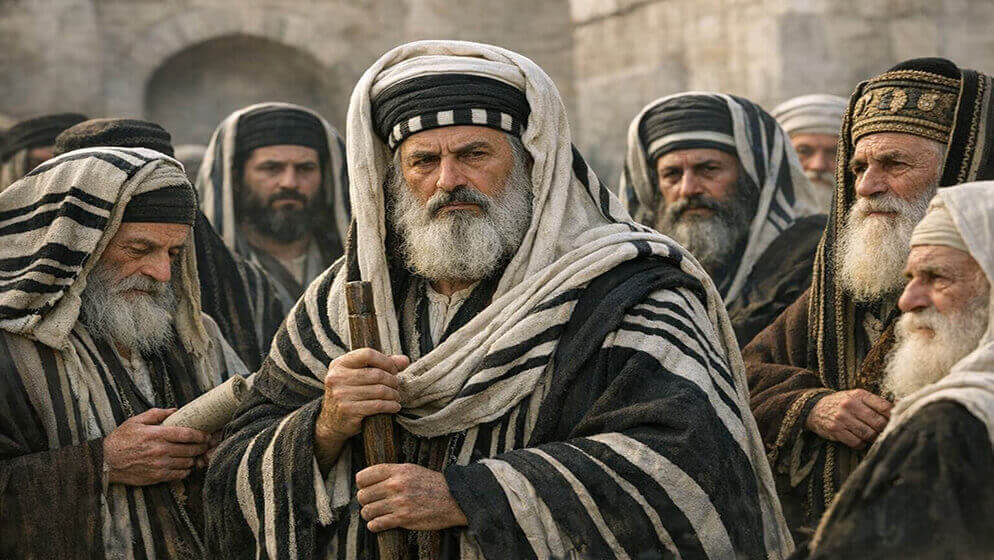
Pharisees were the religious megastars of Jesus’ day. They were generally viewed by the populace as deeply committed, genuinely spiritual, and on fire for the Law of Moses. To us, the word Pharisee is synonymous with hypocrite or religious legalist, but much of that is the result of what the gospels later said about them, not what people thought of them at the time. In our context, they would sell books, attract lots of followers on social media, and have lots of adoring fans. There have been such popular “Christians” in recent years that turned out to be fakes. Jesus sees through all of that. He knew their hearts—just like He knows mine.
In Matthew 23, Jesus rebukes the Pharisees severely. He describes them as hypocrites only interested in what people think, and then declares eight woes upon them. It might be interesting to see how Jesus’ rebuke of the Pharisees in Matthew 23 compares with the Talmud’s criticism of the Pharisees written between 300 and 500 years later (https://chavrutai.com/talmud/Sotah/22b).
The Talmud says that there are seven types of false Pharisees.
- The righteousness of Shechem Pharisee
This is one who performs actions comparable to the action of the people of Shechem, who agreed to circumcise themselves for personal gain (see Genesis, chapter 34). So too, he behaves righteously only to be honored.
- The self-flagellating righteous
This is one who injures his feet, as he walks slowly, dragging his feet on the ground in an attempt to appear humble, and injures his feet in the process.
- The blood-letting Pharisee
This is one who lets blood by banging his head against the walls because he walks with his eyes shut, ostensibly out of modesty.
- The pestle-like Pharisee
This is one who walks bent over like the pestle of a mortar.
- The “tell me what else I can do” Pharisee
This is referring to one who says: Tell me what further obligations are incumbent upon me and I will perform them, indicating that he fulfills all of his mitzvot [613 commandments of the Torah] perfectly and therefore seeks additional obligations.
- The love-of-rewards Pharisee
One who performs mitzvot due to love of the reward he will receive.
- The fear-of-punishment
One who performs mitzvot due to . . . fear of punishment.
Jesus treats the Pharisees much more severely, although His criticisms are similar. He declares condemnation and sorrow the Pharisees in the form of eight woes. This term indicates judgment to come.
- Woe to the soul-destroyer Pharisee (Matthew 23:13). Their behavior not only precludes them from entering the Kingdom of Heaven but dissuades others who are on the right path from going there as well.
- Woe to the oppressor Pharisee (Matthew 23:14). They oppress widows and helpless people while making long righteous prayers in public.
- Woe to the missionary of evil Pharisee (Matthew 23:15). They travel far and wide to gather followers only to make those followers much more evil than themselves.
- Woe to the cheater Pharisees (Matthew 23:16-22). They invent “small print” in their oaths to get out of fulfilling the obligations of those oaths. In doing so, they are not only dishonest, but totally misrepresent important spiritual principles.
- Woe the libertine-in-substance-but-legalist-in-detail” Pharisees (Matthew 23:23-24). These Pharisees are not concerned much about obeying the more important matters of the Law like righteousness, mercy, and justice. But they are very precise about minor tithes and trivial things. As Jesus put it, “they strain at a gnat and swallow a camel.”
- Woe to the self-indulgent Pharisee (Matthew 23:256-26). They are like cups that are clean on the outside but dirty on the inside. Inside they are full of extortion and self-indulgence.
- Woe to the dead-inside Pharisee (Matthew 23:27-28). Jesus described them as being like a grave—beautiful on the outside but full of putrefying flesh on the inside. This was a well-understood idea in the first century. Bodies were typically buried in caves. They were laid out on a rock shelf to decay. When just the bones were left, they would be gathered in a ossuary box and the shelf reused for other burials. Many such shelves might be in a single cave. People knew what it was like to enter a sepulcher that contained multiple bodies at various states of decay.
- Woe to the self-deceived Pharisee (Matthew 23:29-30). They know their forefathers persecuted and killed the prophets sent to them but are convinced that they are more righteous than their fathers and would never do such a thing—even though they will kill the Messiah in just a few days.
Remember that not every Pharisee was every one of these things.
“Wow” you say. “It’s a good thing I am not a Pharisee. They sound like horrible people!”
You’re not? Really? Are you sure?
Here I raise my Ebenezer;
hither by thy help I’m come;
and I hope, by thy good pleasure,
safely to arrive at home.
Jesus sought me when a stranger,
wandering from the fold of God;
he, to rescue me from danger,
interposed his precious blood.
O to grace how great a debtor
daily I’m constrained to be!
Let that grace now, like a fetter,
bind my wandering heart to thee.
Prone to wander, Lord, I feel it,
prone to leave the God I love;
here’s my heart; O take and seal it;
seal it for thy courts above.
(Robert Robinson)
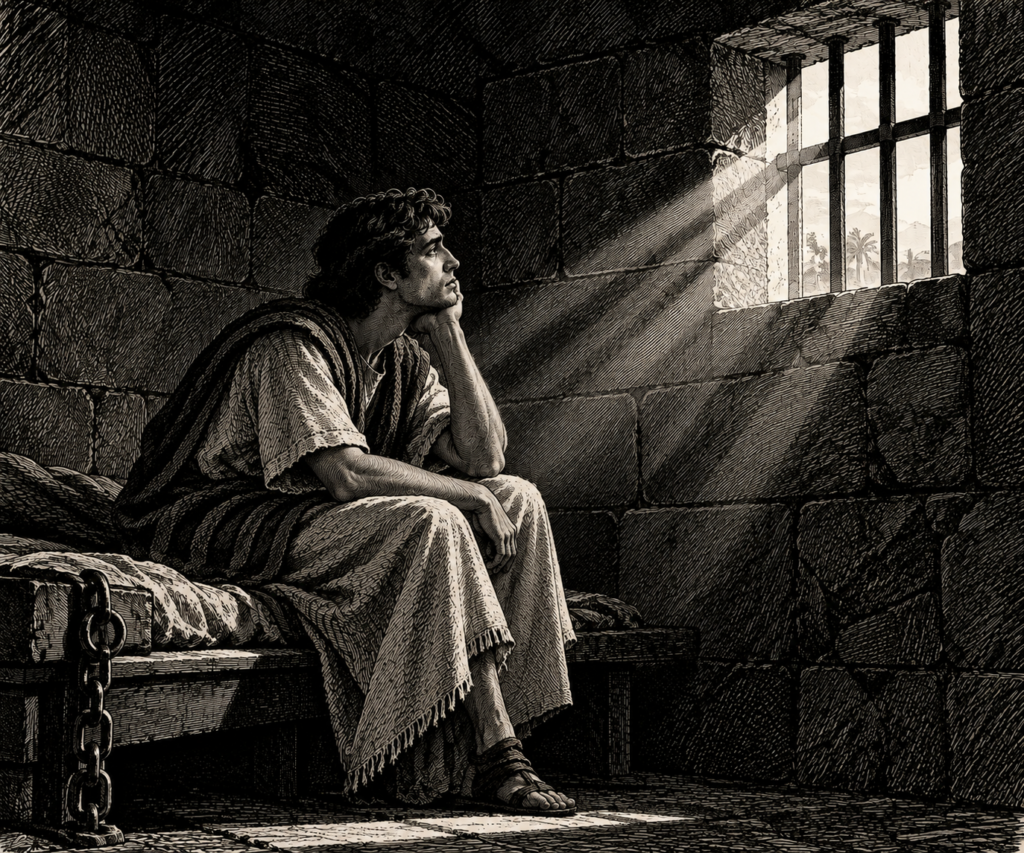
Image created on Microsoft Co-Pilot
Audio version of this post: What Kind of Pharisee are You?
Discover more from Proclaim & Defend
Subscribe to get the latest posts sent to your email.