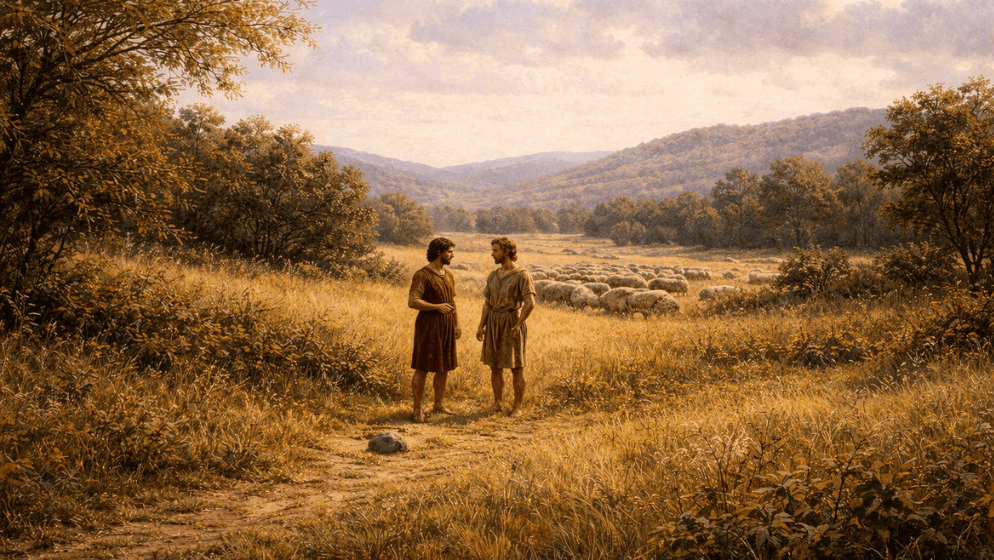
The first sin in the Bible is Adam and Eve eating from the forbidden tree, then running from God’s presence and passing along the blame. The second sin in the Bible is Cain’s anger at and murder of his brother. This story is both incredibly relatable, as is seen from the scores of families that have been strained, divided, and ultimately ripped apart from envy, anger, and jealousy. Yet it is also confusing. It’s confusing because it isn’t immediately obvious why God is displeased with Cain’s offering.
Several theories have been proposed, and I have a theory of my own to throw in at the end. I want to work through each of these and examine the strengths and weaknesses of each position. Not all positions are mutually exclusive, and it’s possible that the correct answer is a combination of two or more. As I see it, there are at least four explanations that can be offered:
The Wrong Kind of Sacrifice
One of the most popular reasons given why Cain’s sacrifice was rejected was because he brought vegetables, whereas Abel brought a lamb. On this view, Cain should have known better, either because God had told him so (in a conversation that we don’t have record of) or because he should have recognized that God made an animal sacrifice. This would also tie into the broader biblical theme of the need for a blood sacrifice to pay for sin. On this view, Cain was too proud to ask his brother for a lamb that he could offer, so he gave an inappropriate offering.
This view I find to be the weakest of the lot. I can’t say definitively that it’s wrong, but God’s response to Cain seems to assume that Cain knew better. I do find it somewhat compelling that the story of the Bible will focus on the sacrifice of the Lamb, but that doesn’t mean sacrifice of vegetables or grain is wrong. In fact, Israel will later be given rules regarding how to offer the fruit of the land as an offering to God. So while this plays well into the overall themes of Scripture, I have a hard time making sense of this passage on this ground.
Intentional Ambiguity
One idea I’ve heard offered is that the story doesn’t tell us why God rejects the offering on purpose. The point is that sometimes we don’t know what God is displeased with us. Sometimes life, and even God, seem unfair. The question being asked here, then, is what do we do in such situations? Do we become bitter against God and blame Him? Do we lash out against those who seem to have it better than us? Or do we accept personal responsibility, accept God’s invitation to make right choices so that we can be accepted, and resist the urge to give into our sinful impulses?
I can see a case being made for this view from the reader’s perspective. Maybe you could argue the narrative is intentionally ambiguous to raise these questions in our mind, but as with the previous interpretation, I struggle with reconciling this with God’s response. God seems to think that Cain should have known exactly what he did wrong, and what he needed to do to make things right. While we might have questions, God seems to assume Cain doesn’t.
A Subpar Sacrifice
When reading Old Testament stories, always pay attention to the details. That’s why it’s important to note carefully the description of each brother’s sacrifice. Abel’s sacrifice is described as “some of the firstborn of his flock and their fat portions” (Genesis 4:4). Cain’s sacrifice is described simply as “some of the land’s produce” (Genesis 4:3). Abel’s sacrifice appears to be the best that he has—the best animals (the firstborn) and the best part of the animal (the fat). Cain, on the other hand, appears to be simply giving God something. There is no mention that it is the firstfruits, or the best of the land. On this reading, Cain is simply doing what he can to get by, while Abel is being more intentional, serious, and sacrificial in his offering.
I think this is probably the best of the options given so far. I do think that the descriptions of the sacrifice clearly highlight the extra attention Abel gave to the worship. Cain appears to be doing enough to get by, which is not good enough with God. This is why God is able to say, “If you do what is right, won’t you be accepted?” (Genesis 4:7) On this view, Cain knows that he hasn’t done as much as his brother, but rather than become convicted he becomes angry.
Self-Centered Worship
This last view is my own personal take, although it’s possible I heard it somewhere and have simply forgotten the source. It’s not necessarily incompatible with the others, but I think it can help us understand a little better what is going on in this passage. I think that rather than looking at what happened before the sacrifice, a lot becomes clear when we focus on what happens after the sacrifice. I think Cain’s reaction tells us a lot about what was going on in his heart while he was making the sacrifice.
When God rejects Cain’s offering, Cain becomes angry, and angry at his brother Abel in particular who has done nothing wrong. I think this fact alone shows us that for Cain, worship was not really about God. It was always about Cain. If I bought my wife a gift, and she was offended by it, how should I respond? If I became angry at her or, worse yet, become angry at someone whose gift she did appreciate, I would be showing that me giving my wife the gift wasn’t really about her. It was really about me.
Whatever other reasons might be at play, and I think the lack of quality played into it, from Cain’s reaction we can see at least part of the reason God rejected his sacrifice. Rather than being sad or humbled that God rejected his offer, Cain became upset. Rather than realizing something was wrong with him, accepting responsibility, and beginning the painful work of addressing his sinful heart, Cain doubled down. Like his parents before him, Cain saw his sin as the fault of others. That goody-two-shoes brother. That unreasonable Creator. If it weren’t for his brother! If God were only more accepting!
The story of Cain and Abel is haunting. We see what should be one of the closest relationships on earth split over seemingly nothing and descend into the first ever cold-blooded murder. Yet at the core of this story is a story of what happens when our worship of God goes off the rails. When our worship of God stops lining up with His will and becomes focused on us rather than on Him. The story of Cain and Abel is a warning that wrong worship is a much bigger disaster than we tend to believe.
Discover more from Proclaim & Defend
Subscribe to get the latest posts sent to your email.