Drawing Theological Boundaries
We won’t always agree. No, let me rephrase that. We won’t ever agree—on everything doctrinal and practical about the faith.
History indicates this and the Bible recognizes it. The Apostle Paul recognizes this in the early church regarding worship choices. Historically, Baptists have also recognized this in one of the key Baptist Distinctives—individual soul liberty and responsibility.
We will all give account to God individually for the things we believe and practice. We will not be able to hide behind the Church, Church leaders, or a denominational structure.
Theological Boundaries
But we also must somehow determine what essential obedient Christianity looks like. Theologically, the early fundamentalists were not trying to determine what was obedient or not, but rather the theological boundaries of true Christianity. They wrangled and battled over the “fundamentals” and eventually settled on a consistent set of doctrines that comprised essential Christianity. They called these doctrines the Fundamentals and we have discussed them often over the years.
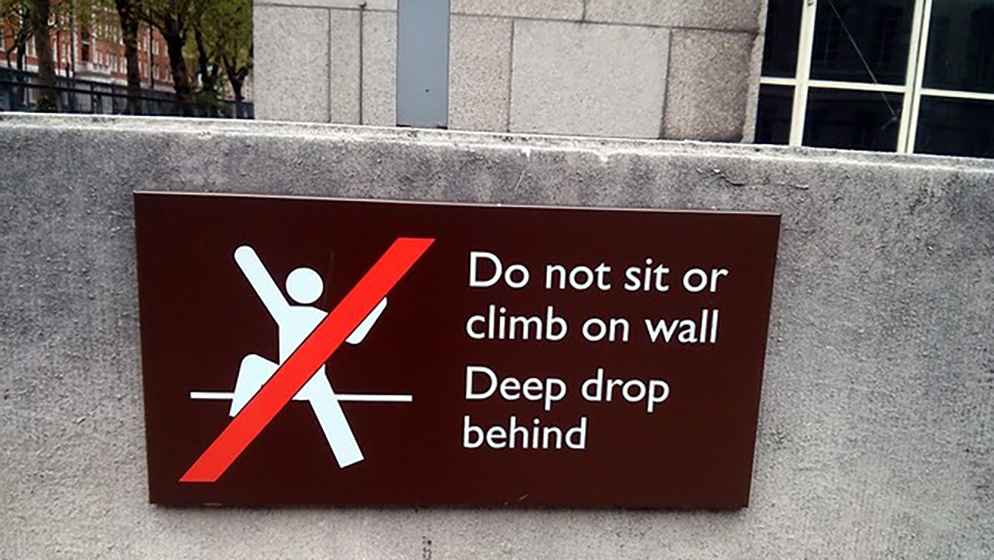
They put a fence around the playground of Christianity and said that once you cross the fence, you can no longer legitimately call yourself Christian.
Moral boundaries.
Paul does not draw just theological boundaries, but also moral boundaries around the faith, in 1 Corinthians 5:9-11. Immorality cannot be tolerated in the confessing church even if other theological issues are in order. Paul’s list here is not about matters of the heart, which only God can know, but rather matters of public behavior and reputation.
My friend, Kevin Bauder, says that the gist of Paul’s statement in 1 Corinthians 5:11 is “if any so-called brother be a fornicator, or covetous . . . “ indicating that such behavior ought not be identified with professing Christianity in any way. We ought not offer such people a place at the Lord’s Table.
Unexpected issues do arise.
The early fundamentalists did not conceive same-sex marriage as an issue the future church would face, but a traditional marriage position is an identifying position of Christianity both on the theological and moral level.
Boundaries within boundaries are also necessary.
There are varying levels of fellowship. For instance, I can fellowship with other believers who hold to a different type of Church government than I do. We disagree, but I would not consider them outside the faith. I could even believe that their form of government is dangerous to one degree or another. And yet we can fellowship as brothers in Christ.
However, members of the same church must agree on the form of government their church practices.
Other groups sometimes draw narrower boundaries.
Educational institutions, denominations, and fellowships name other identifying characteristics as important for their purpose and mission. These are important distinctives and are not viewed lightly, but they are also not viewed as essential to the Christian faith itself. These might include methods of interpretation, worship practices, and key theological positions.
One of the things we do in the FBFI is wrangle with one another about the fences we set up. We have identified our purpose and mission but there are always new issues pastors and churches face.
We must prioritize our own issues.
Our goal isn’t just to criticize what the other guys believe or do, but very much to talk about the controversies in our own fellowship and churches. We don’t do this to be critical, but to be helpful, and because critical thinking about what WE do is essential.
Over the years we have had to wrangle through such issues as Bible translations, knowing that we would have wide disagreement in our fellowship, but also knowing where we do and DO NOT draw a boundary is essential.
Other examples include invading doctrines such as Postmillennialism, Theonomy, the charismatic movement, Word of Faith movement, New Perspective on Justification, and more. Some of these touch obedient fellowship, some denominational boundaries, some essential doctrines, and others moral issues. For instance, not only does the Word of Faith movement violate clear Bible teaching, in most instances it is the classic violation of Paul’s condemnation of covetousness in 1 Corinthians 5:11.
We have some wrangling ahead.
One moral/theological issue that is now rising to the top of the list for us is the attitude of the church toward Israel and the rise of antisemitism in professing Christianity. Many fundamental Baptist church members are avid followers of Candace Owens, Tucker Carlson, and others. Since many conservative Christians are also conservative politically, we tend to easily gravitate toward conspiracy theories—some of which prove true and others destructive. What is clear from our preliminary discussion is that we are going to have disagreements about Israel as an ethnic group and as a nation and the nuances of the present situation in Bible prophecy, but we will seek common ground regarding God’s future for Israel and the immorality of evangelical antisemitism.
Working through these things is one of the reasons we exist as a fellowship. We must face our own issues.
We won’t always agree on the specifics, but we usually find common ground on the boundaries.
Audio version of this post: Drawing Theological Boundaries
Discover more from Proclaim & Defend
Subscribe to get the latest posts sent to your email.